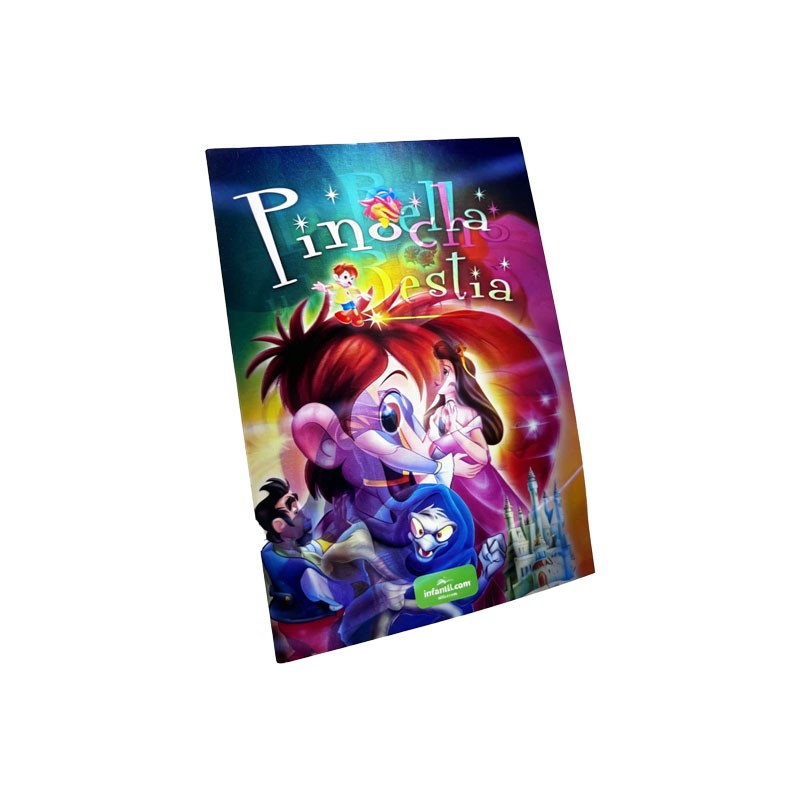
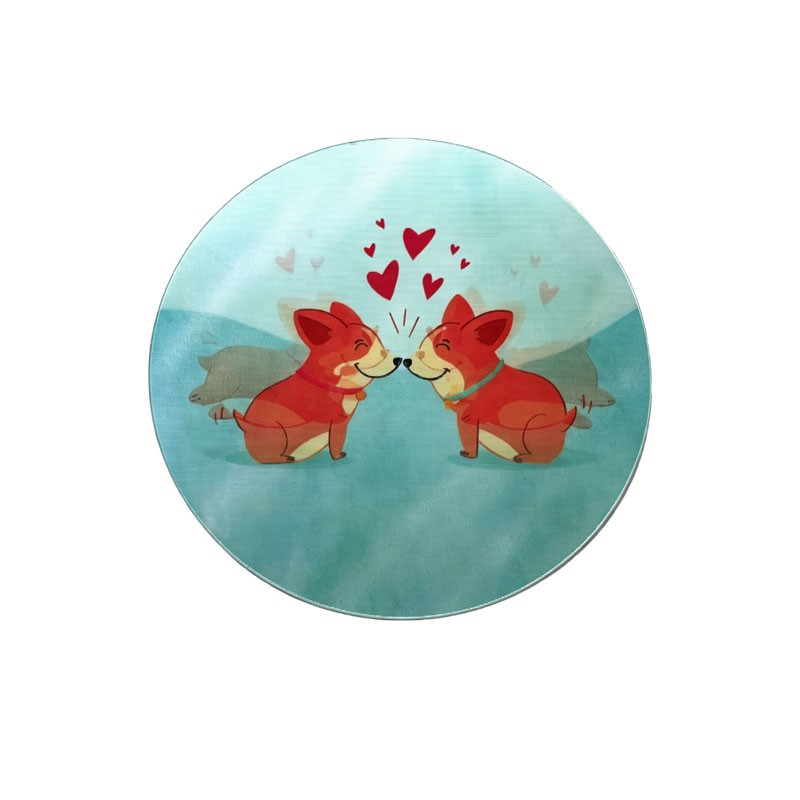
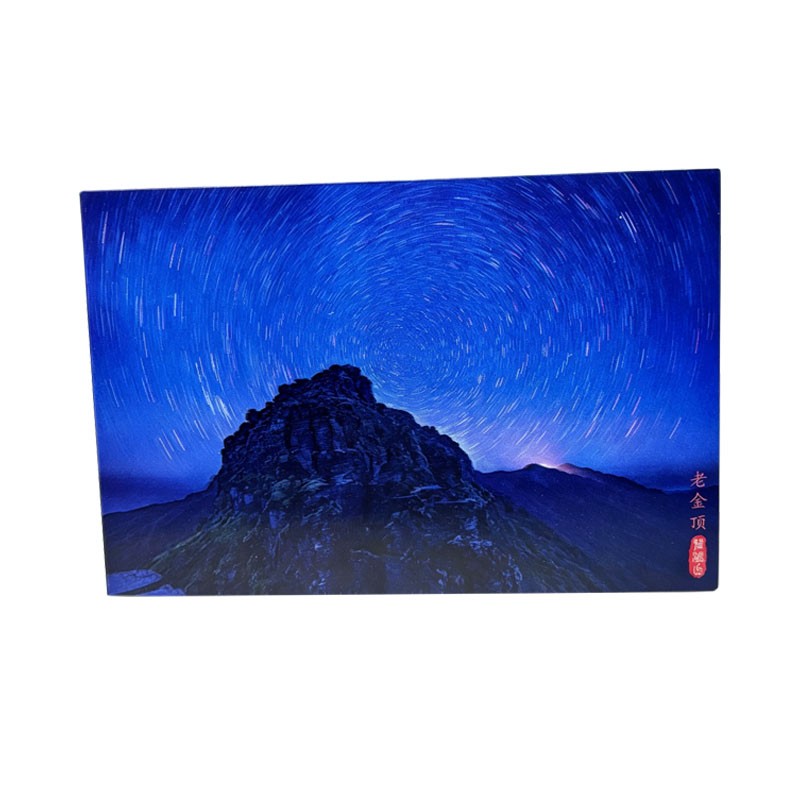
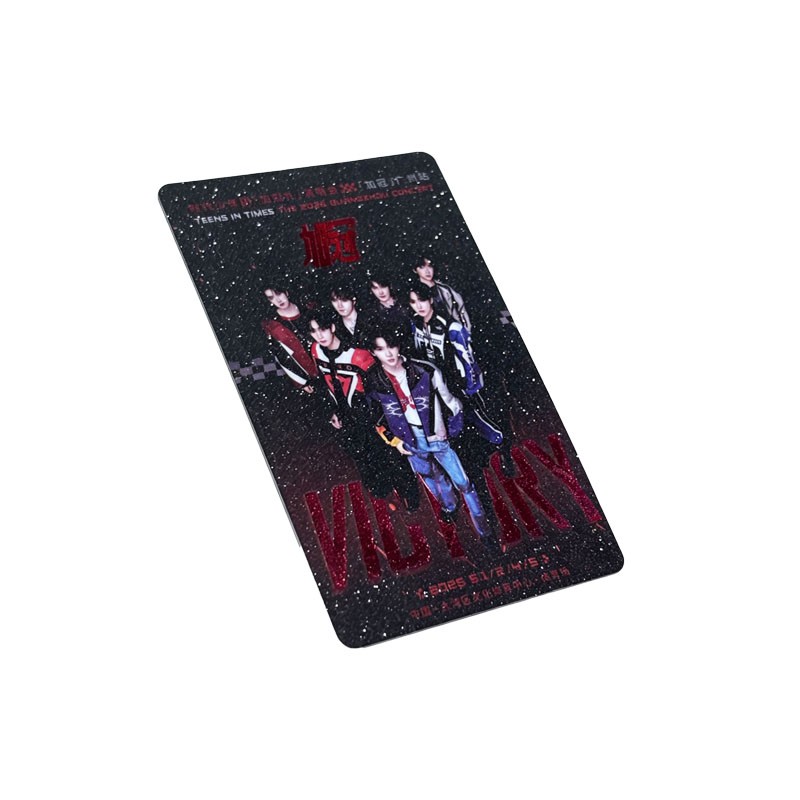
Lenticular Card Introduction:
Common names: 3D flip card, lenticular flip card, animation card. The general industry term is Lenticular Card. There are three typical visual effects:
1. Flip effect: Switch between two or more completely different images when viewed from different angles.
2. Animation effect: The image plays continuous motion as you tilt the card.
3. 3D depth effect: The artwork presents a simulated stereoscopic depth.
Material - Lenticular Sheet:
The surface is a columnar lenticular lens film, with fine semi‑cylindrical ridges (vertical micro‑lenses visible to the naked eye). Graphics are printed on its reverse side.
Common thickness: 0.3 mm, 0.45 mm, 0.6 mm. Cards mostly use 0.3–0.45 mm PET lenticular sheet (rigid PET material, ideal for card production).
Structure: PET lenticular lens layer + printed graphics layer. For thicker cards, it may be laminated with paper cardstock or PVC on the back.
Note: This is different from laser foil / hot stamping. Laser finishes create rainbow reflective shimmer; lenticular cards change the actual image content.
Production Process:
1. Image interlacing: Two or more source images are sliced and interleaved with dedicated lenticular software. The sliced strips align precisely with the lenticular ridges. This is the critical step — normal artwork cannot produce flip effects directly.
2. Printing: Print on the flat reverse side of the lenticular sheet, never on the ridged front lens surface.
Small runs: UV flatbed printing directly onto the back of lenticular sheet.
Mass production: UV rotary printing or offset printing, using UV inks formulated for PET lenticular stock. Regular inks have poor adhesion.
3. Finishing:
Optional back lamination with paper or PVC for extra rigidity, for collectible cards, membership cards etc.
Die-cutting and corner rounding.
Optional protective lamination (the lens surface scratches easily; scratches will ruin the flip effect).
Typical Applications:
Anime collectible lenticular cards, blind box cards, game TCG cards, gift cards, souvenir cards, promotional giveaways, bookmarks, postcards and stickers.
Comparison with Similar Finishes:
| Process | Visual Feature |
|---|
| Lenticular card | Image content flips or animates with viewing angle |
| Laser / holographic foil card | Fixed pattern, only rainbow iridescent reflection |
| Security hologram card | Small anti‑counterfeit hologram marks, full-image flip not supported |
Additional Notes:
1. LPI (Lines Per Inch): Card-grade lenticular commonly uses 75 LPI and 100 LPI. Higher LPI delivers sharper detail but a narrower viewing angle.
2. Limitations: The lens surface is scratch-sensitive, heat-sensitive. Excessive bending will damage the lenticular effect.
3. Orientation: Most are vertical lenticular, flipping left-right; horizontal lenticular changes image when tilted up and down.